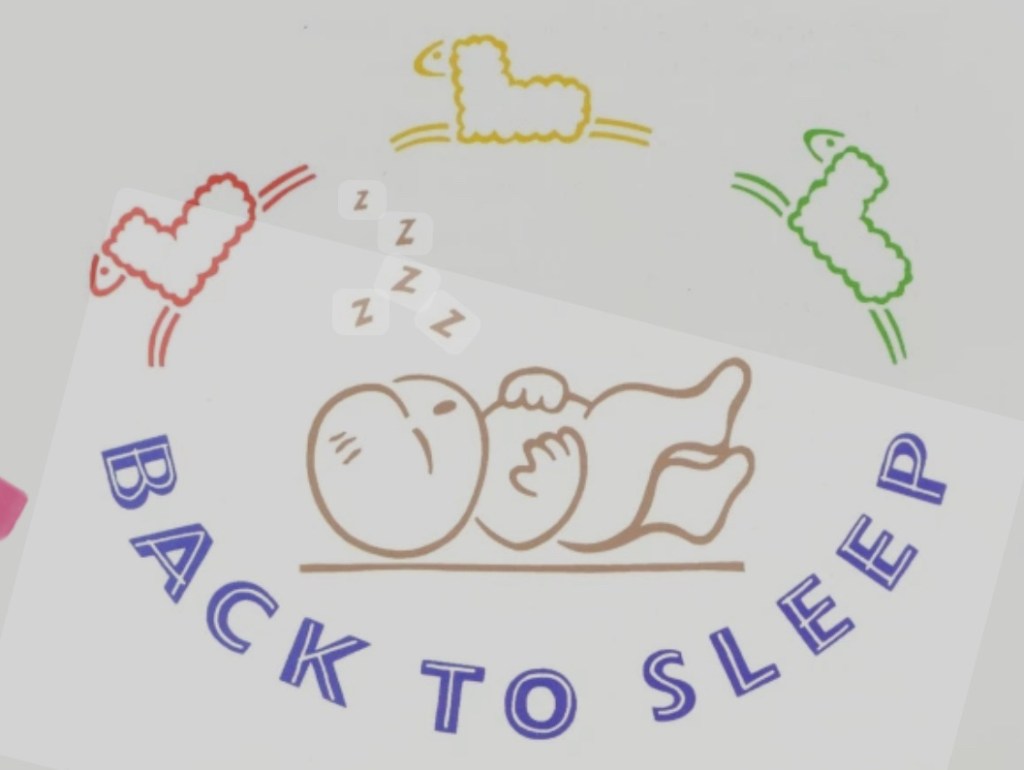
Sudden Infant Death Syndrome (SIDS) is also commonly referred to as crib death. It is the term used to describe the death of an infant who is less than 1 year of age without a clear cause – even after a full investigation.
About 3,000 unexpected infant deaths occur per year. Of these deaths, more than 1 in 3 are caused by SIDS.
Research shows that certain factors and situations increase the risk for Sudden Infant Death Syndrome (SIDS) and other sleep-related infant deaths, such as from suffocation.
Some are changeable, meaning parents and caregivers can take action to lower the risk. Others cannot be changed. Unchangeable factors appear with an asterisk (*) in the following list:
- Sleep position:
- Babies placed to sleep on their stomachs or sides are at higher risk for SIDS.
- Babies who are used to sleeping on their backs but who are placed on their stomachs or sides for sleep, like for a nap, are at very high risk of SIDS.
- Birth-related factors*:
- Babies born early (before 37 weeks of pregnancy) are at higher risk for SIDS.
- Low birthweight babies, weighing 5 pounds, 8 ounces or less, are at higher risk for SIDS.
- Prenatal/pregnancy factors:
- Getting regular medical care beginning early in and continuing throughout pregnancy reduces the risk of SIDS.
- Smoking during pregnancy greatly increases baby’s risk for SIDS.
- Drug and alcohol use during pregnancy increases baby’s risk for SIDS.
- Race/ethnicity*: Some racial/ethnic groups are at higher risk for SIDS than others. Black/African American and American Indian/Alaska Native babies are at higher risk for SIDS than are White, Hispanic, and Asian/Pacific Islander babies.
- Sleep area/surface:
- Babies who sleep on a soft/squishy surface or under soft/fluffy bedding are at higher risk for SIDS and other sleep-related deaths from suffocation, entrapment/wedging, and strangulation.
- Having items, such as blankets, bumpers, and stuffed toys, in the sleep area increases the risk for SIDS and other sleep-related deaths from suffocation, entrapment/wedging, and strangulation.
- Temperature:
- Babies who get overheated are at higher risk for SIDS.
- Overbundling, or dressing baby in too many layers of clothing and bedding for the temperature of the room, can increase the risk of SIDS,
- Babies are more likely to overheat when they are placed on their stomachs to sleep.
- Human milk:
- Babies who are fed breastmilk are at lower risk for SIDS than formula-fed babies.
- Feeding human milk for some time is more protective against SIDS than not feeding human milk at all.
- Immunizations: Vaccinated babies are at lower risk for SIDS than unvaccinated babies.
- Illness*: Infants who have had a febrile illness, one with a high fever, within the past 2 to 3 weeks are at higher risk for SIDS.
- Pacifiers during sleep: Babies who sleep with pacifiers are at lower risk for SIDS than babies who do not use pacifiers during sleep.
- Sleep location:
- Babies who sleep on an adult bed, couch, or armchair alone, with an adult, with a sibling, or with a pet are at very high risk for SIDS and sleep-related deaths from entrapment, suffocation, and strangulation.
- Babies who share a room, but not a bed, with parents are at lower risk for SIDS and other sleep-related deaths than babies who sleep in their own room.
- Bed sharing/sharing a sleep surface: Sharing an adult bed, couch, or armchair with baby can be especially dangerous in some situations:
- Very high risk:
- The sleep surface is soft, such as a waterbed, old adult mattress, couch, or armchair.
- The adult is very tired, taking medication that makes them drowsy, or using substances like alcohol, or their ability to respond is affected in some way.
- The adult smokes cigarettes or uses tobacco products (even if they do not smoke in the bed).
- High risk:
- Baby is younger than 4 months old (regardless of adult smoking or sleep surface).
- The adult is a caregiver other than the baby’s parent, such as a grandparent or sibling.
- Higher-than-normal risk:
- Baby was born preterm (before 37 weeks) or at a low birth weight.
- The sleep area includes unsafe items, such as pillows or blankets.
- Very high risk:
By following safe sleep recommendations, parents and caregivers can reduce the risk of SIDS and other sleep-related infant deaths.
One of the best ways to prevent SIDS is to put your baby to sleep on its back during n asps or at night. The back sleeping position is the safest for all babies, including those born prematurely and those with reflux, until they are 1 year old.
Use a firm, flat and level mattress covered with a fitted sheet. Do not use pillows, extra blankets or stuffed animals in your baby’s crib.
Car seats, strollers, and sitting devices are not recommended as baby’s regular sleep or nap space. If baby falls asleep in a sitting or carrying device, move them to their regular sleep space as soon as possible.
Let’s work together to reduce the risk of SIDS!!
 Tiny Miracles